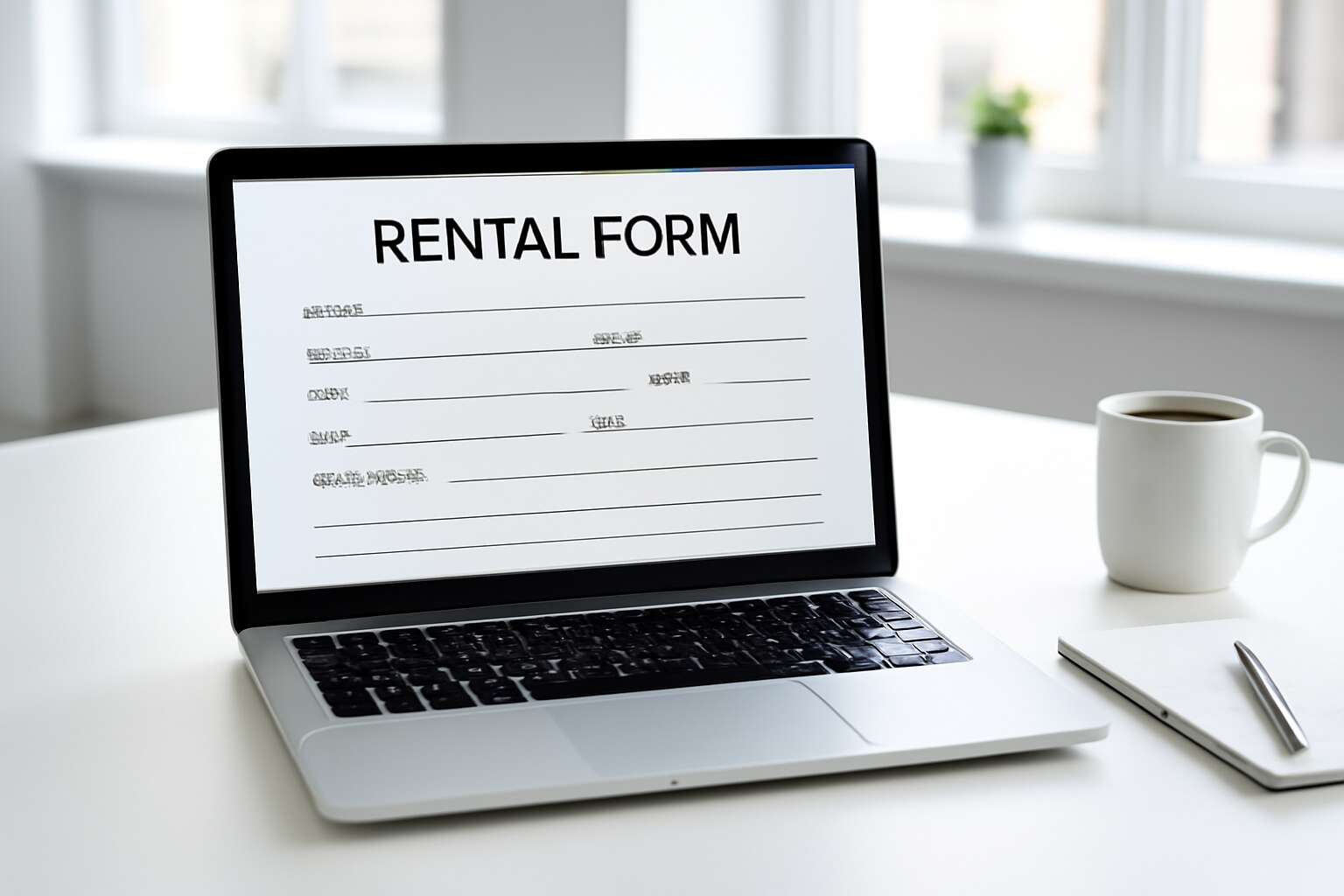
User-Focused Form Design for Laptop Rental Requests
Understanding user needs and goals
In a land of backlit screens and whispered deadlines, the laptop rental form becomes a compass for human needs. A startling 40% of applicants abandon online requests mid-flow, drawn away by opacity and clutter. Clarity guides the hand and the mind toward resolution, not resistance.
Design begins with listening—understanding what a user seeks: a quick loan of gear, a reliable deadline, a transparent cost. The form should honour intent with simple labels, logical order, and accessible language that feels trustworthy and calm.
- Clear labels and single-purpose fields
- Inline validation that guides without shouting
- Progress indicators so journeys stay visible
When those threads align, the experience becomes a quiet ritual—efficient, humane, and persuasive without shouting aloud its own purpose. The form speaks in a confident cadence, and the laptop you offer arrives with the grace of a well-kept promise.
Essential field groups and data capture
In the quiet calculus of equipment, the laptop rental form acts as a compass for intention. It can soothe tense deadlines and nearby panic with a single, well-phrased prompt. Clarity in the form expedites consent and trust, turning a routine request into a confident, human exchange!
- Contact details and account verification
- Delivery or pickup location
- Laptop specifications and quantity
- Loan period, usage window, and deadline
- Billing preferences and cost visibility
- Consent, accessibility, and terms acknowledgement
Data capture must be essential and unobtrusive. Use simple labels, single-purpose fields, and inline validation that guides without shouting. A tiny progress indicator helps users track momentum, so the journey feels deliberate rather than reactive.
When these threads align, the form becomes a quiet promise—efficient, humane, and persuasive without shouting its purpose.
Accessibility and inclusive design
Across UK workplaces, eight in ten projects hinge on timely access to equipment. A well-crafted laptop rental form speaks softly, guiding readers with clear intent and quiet confidence. Clarity here isn’t patronising—it’s a promise that a routine request can feel human and humane.
Accessibility and inclusive design should be woven into every field. A form that respects differences in ability and device becomes a trusted partner.
- Descriptive labels and inline validation that guide without shouting
- Keyboard-friendly navigation and logical focus order
- Screen-reader compatibility and scalable typography
From legible typography to predictable flow, the experience remains humane. A tiny progress indicator marks momentum, keeping the journey deliberate and dignified while the laptop rental form whispers assurance rather than urgency.
Error handling and inline validation
Clarity is kindness, and in the glow of a screen that promise lands softly. A laptop rental form should read errors as gentle guidance, not stern verdicts; real-time validation catches slips the moment they happen, turning a potential bottleneck into a fluid, humane exchange. Readers feel seen when prompts are precise and forgiving.
Inline validation works best when it speaks at the field’s own pace.
- Specific, actionable messages beside fields to guide the user
- Proximity of feedback to the offending input, not at the bottom of the page
- Accessible language with screen-reader friendly phrasing and scalable typography
A calm, connected flow also preserves momentum. The laptop rental form becomes a cooperative partner when errors are handled with clarity and care, preserving dignity even on hurried days.
Clear calls-to-action and copy
Two seconds decide whether a visitor stays or moves on. In a crowded market, the laptop rental form becomes a doorway to trust and speed.
We craft clear calls-to-action and friendly copy that honours the reader’s pace. Labels are gentle, prompts precise, and the experience feels like a helpful concierge rather than a page flood here in the UK.
To keep the flow uncluttered, consider this approach:
- Prompts are concise and positioned beside each field, guiding users as they type.
- Feedback appears near the input, maintaining the flow without forcing a pause.
- Language is inclusive with scalable typography to support readability across devices.
With this user-focused approach, a laptop rental form becomes a cooperative partner, turning hesitant moments into smooth, human exchanges.
Core Fields and Data Capture for Rental Requests
Personal information and identity verification
Core fields shape the speed and integrity of the laptop rental form. When personal information is collected with clarity and privacy in mind, approvals feel almost seamless. Industry observations show roughly a 30% faster turnaround when the data capture is lean, validated, and purpose-driven. This segment zeroes in on personal information and identity verification, inviting trust while avoiding friction.
- Personal information: name, contact, and address
- Identity verification: government ID, verified contact methods
- Privacy and consent: GDPR-compliant disclosures and data minimisation
Data capture should feel robust yet respectful—minimal fields, clear purpose, and transparent retention policies. When done well, the laptop rental form becomes a trustworthy gateway, guiding users through identity verification with confidence.
Device specifications and configuration options
Speed sells! In practice, 30% faster approvals arrive when the laptop rental form stays lean and purpose-driven. Core fields steer the process, guiding data capture to be precise rather than sprawling. A well-structured form is a gateway, not a maze, for teams ordering devices on tight deadlines.
Data capture should be robust yet respectful—minimal fields, clear purpose, and transparent retention. For rental requests, device specifications and configuration options are front-and-centre, letting users tailor laptops to their project needs without over-sharing. This approach reduces back-and-forth and speeds fulfilment.
- CPU and RAM tiers
- Storage capacity and type
- Display size and OS image
With these fields, the form becomes a trustworthy gateway, guiding users through the request with confidence and clarity. It aligns procurement threads with IT policies and helps teams move from request to deployment in record time.
Pickup, delivery, and scheduling details
Speed is the project deadline’s quiet ally. Lean core fields turn a routine request into a rapid decision. In practice, 30% faster approvals arrive when the laptop rental form stays lean and purpose-driven. A focused entry point—one that asks for essential details only—reduces back-and-forth and clears the path to deployment. When teams see a gateway that respects time and policy, trust follows and procurement moves with confidence.
Core fields and robust data capture should prioritise pickup, delivery, and scheduling details without bloating the form.
- Pickup window and location
- Delivery address and on-site setup
- Scheduling confirmation and SLA
By anchoring these fields to clear policies and timelines, teams avoid misinterpretation and accelerate fulfilment across the UK.
Billing, payment, and invoicing information
Punchy invoices win procurement tug-of-wars. A tidy laptop rental form aligns billing, payment, and invoicing data with policy clocks, turning hesitation into action. In the UK, VAT, PO numbers, and currency clarity aren’t optional accents—they’re the spine of smooth settlement, and a lean data capture approach keeps them visible at a glance.
Core fields and data capture should prioritise billing details with a UK-friendly twist:
- Billing contact details (name, role, and communication preferences)
- Payment method and terms (credit card, BACS, net terms)
- Invoicing schedule, currency, and VAT information
Doing so reduces back-and-forth and helps finance sign off in a single pass, which is exactly the kind of speed the UK procurement teams deserve.
Terms, consent, and compliance checks
A lean, well-structured laptop rental form can shave days off procurement cycles. In UK teams, 76% report faster sign-offs when terms, consent, and compliance checks appear at first glance, ready to approve. Core fields and data capture should foreground rental terms, consent, and policy checks, without burying them in jargon.
- Clear terms and conditions acknowledgment tied to the rental window and device configuration
- Explicit consent for data collection, retention, and sharing, aligned with GDPR expectations
- Compliance flags for identity verification, policy adherence, and regulatory screening
These elements keep governance crisp and the process humane, turning risk into readiness while preserving a seamless user experience.
Security measures and sensitive data handling
“Security is a process, not a product,” Bruce Schneier reminds us. In the heat of UK procurement, a laptop rental form becomes a quiet guardian, foregrounding core fields and data capture that protect both user and organisation. When the form gathers only what is essential—identity, contact details, and device configuration—risk softens and approvals accelerate.
- encrypted transmission for all submissions
- role-based access to sensitive entries
- data minimization and purpose limitation
- clear retention and deletion schedules
This approach ensures GDPR-aligned handling, audit trails, and humane governance that keeps the form seamless.
Form UX, Validation, and Accessibility
Real-time validation and feedback
A recent stat lands hard: 68% of online renters abandon a form that feels slow or opaque. The laptop rental form should feel like a whisper—fast, precise, and almost invisible as you type.
Form UX and validation go hand in hand. Streamlined field order, meaningful labels, and inline hints reduce cognitive load, while real-time validation and feedback catch errors before you press submit. Subtle animations confirm success without shouting, keeping the user in control.
Accessibility is not an afterthought; it’s the backbone. Real-time feedback must be perceivable by screen readers and navigable by keyboard. Essentials include:
- Clear, consistent focus order and labels for screen readers
- Inline error messages positioned near the relevant field
- Keyboard-friendly submission and accessible aria attributes
When UX, validation, and accessibility harmonize, the laptop rental form becomes a quiet ally in a complex journey.
Inline help text and placeholders
Crafted with restraint, the laptop rental form becomes a quiet partner in a busy day, guiding the cursor with a single breath. Form UX flourishes in a deliberate field order, lucid labels, and hints that illuminate without shouting, while gentle validation confirms input as you type, turning complexity into clarity.
Inline help text and placeholders should be companions, not distractions. They guide the eye and the mind, posing gentle prompts as you type. Consider a compact checklist:
- Clear, contextual labels
- Placeholders that demonstrate format
- Keyboard-first navigation and accessible aria attributes
Accessibility is the backbone; real-time feedback must be perceivable by screen readers and navigable by keyboard. A well-tuned form places errors near the field and keeps focus order intact, letting users finish with confidence and calm.
Progress indicators and save-and-continue
“Clarity is the fastest path to completion,” a designer once whispered, and the laptop rental form lives by that creed. It becomes a quiet instrument, guiding the user with a steady rhythm. Form UX, validation, and accessibility progress indicators work in harmony: real-time validation flags mistakes with a soft touch, while save-and-continue lets the user resume without losing their thread. What a relief this calm presence brings to a busy day!
This laptop rental form remains a quiet partner in the workflow. A compact checklist keeps this balance intact:
- Progress narration that screen readers can announce without noise
- Save-and-continue preserves intention across sessions
- Motion-conscious cues that respect accessibility settings
Mobile responsiveness and touch targets
Across the digital landscape, around 60% of users abandon a form mid-flow due to ambiguity and friction. The laptop rental form is a calm compass, guiding hands with a steady rhythm, turning a moment of decision into a smooth journey.
In form UX, live checks light the path. As you fill the form, errors appear as gentle cues, not alarms, letting users correct without losing momentum. On mobile, the layout reflows for thumb-friendly tapping, with larger targets and clear focus indicators that speak to assistive tech.
- Responsive grid that fluidly adapts from phone to desktop
- Aria labels and logical focus order to aid screen readers
- Touch targets sized and spaced for confident tapping
Motion-aware cues respect user preferences; when motion is reduced, the interaction remains crisp and predictable, ensuring the laptop rental form stays usable for everyone, anywhere.
Clear error messaging and remediation guidance
In a country where 60% of users abandon a form mid-flow due to ambiguity, the laptop rental form must feel calm and purposeful. It becomes a steady guide in the moment of decision, turning hesitation into momentum and trust into action—steady as a village clock on market day.
Clear error messaging and remediation guidance help keep that momentum. Live validation presents friendly cues near the offending field with concrete steps to fix.
Accessibility and universal usability: screen readers should follow a logical focus order; aria labels should be descriptive; motion-reduction settings are respected; touch targets are large and comfortably spaced; focus indicators stay visible. For this form, these choices ensure everyone can proceed with confidence.
Accessibility considerations including ARIA and WCAG
The laptop rental form should feel calm and purposeful, a steady guide in the moment of decision. When UX is tuned, form fatigue drops and momentum rises, turning hesitation into action with the reliability of a village clock on market day.
Key considerations for validation and accessibility unfold in real time:
- Live validation cues appear beside fields with clear guidance.
- Descriptive ARIA labels and aria-describedby relationships.
- Respect motion-reduction preferences and provide opt-out options.
- Large, well-spaced touch targets and visible focus indicators.
Accessibility concerns including ARIA and WCAG guidelines ensure everyone can proceed with confidence in the laptop rental form. Follow a logical focus order, descriptive aria-labels, and respect motion-reduction settings; ensure touch targets are large and spacing is generous, with persistent focus indicators so the path forward remains obvious.
SEO Strategy and Conversion Optimization for Rental Forms
Keyword-rich headings, meta cues, and slug structure
“Trust is earned in micro-moments,” notes a digital strategist, and the laptop rental form is your storefront—so make the first impression count. A tight SEO strategy, clean slug structure, and precise meta cues can turn a casual click into a confirmed booking. Keep the funnel fast for UK users and the language crystal clear.
To nudge conversions, consider these structural tweaks:
- Slug structure that mirrors user intent and is easy to parse for search engines.
- Meta cues with concise title and description that include the term “laptop rental form” for relevance.
- Structured data to signal Product or RentalAvailability, boosting visibility in UK search results.
Test, measure, and iterate; the UK audience rewards clarity and confidence.
Schema markup and structured data for rentals
In the UK, structured data isn’t optional—it accelerates the journey from search to sale. Rich results catch eyes in crowded laptop pages and reduce bounce in micro-moments. This is where a focused SEO strategy meets conversion psychology.
For a laptop rental form, deploy JSON-LD that highlights Product, RentalAvailability, and Offer. Tie the snippets to the page’s real-world actions—availability windows, pickup options, and currency—so users see the terms they expect, fast.
- Product, RentalAvailability, and Offer in schema
- Delivery and pickup options with UK GBP pricing
- Real-time price and availability signals
These cues support a fast funnel and confident clicks in the UK.
Internal linking and content silos around rental services
In a crowded UK market, the first impression of a laptop rental form can decide the sale before curiosity fades. A sharp, frictionless path to inquiry converts hesitation into commitment. “Clarity is commerce,” as a veteran strategist notes, and it’s never truer than on checkout pages where time matters.
Strategically structured internal linking and content silos around rental services guide crawlers and readers alike. Surface the right context through linked guides and policy pages so users navigate without leaving the page.
- laptop hardware specs
- rental terms and liability
- delivery and scheduling
This approach reinforces real-world actions—pricing in GBP, pickup windows, and real-time availability—while keeping the content cohesive. It nurtures a fast funnel and confident clicks across UK audiences, anchored by a clean, conversion-first laptop rental form experience.
Conversion-focused copy and microcopy for CTAs
In a crowded UK market, the laptop rental form is the first decisive moment. A tight SEO strategy makes that moment count by aligning on-page words with user intent and search intent, using clear headings and concise prompts. The laptop rental form becomes both a navigational anchor and a conversion trigger, guiding readers to inquiry without friction.
Conversion-focused microcopy for CTAs takes the form beyond generic buttons. Short, concrete phrases work best: “Check availability”, “Get a quote”, “Lock in rate today”. Pair them with reassuring copy beside the fields—privacy promises, simple next steps, and visible progress so visitors feel in control rather than rushed.
Tests and metrics decide what works: variants of the same CTA copy, different button colours, and positioning. The aim is a smooth journey that respects UK users’ pace while keeping content cohesive around the brand and service.
A/B testing ideas for form layouts and CTA placement
In the UK, conversion-minded websites report double-digit lifts when the laptop rental form is polished for search and smooth inquiry. I watch the page respond to tweaks, testing and iterating, and the results feel almost like a spell. The real hook is that SEO draws the right visitors, while conversion optimisation guides them with quiet confidence through the form.
- Single-column vs two-column layouts to reduce friction.
- CTA above the fold vs at the end.
Clear, patient copy beside each field keeps readers feeling in control—no rush, just a promenade through intent. The journey through the laptop rental form should read like a cathedral of efficiency, dark and assured, yet warmly pragmatic.
Localization, local SEO, and business profile optimization
UK conversion-minded sites report double-digit lifts when the laptop rental form is polished for search and smooth inquiry. The page responds to tweaks—almost like a quiet spell—where SEO draws the right visitors and conversion optimization guides them through the form with confident ease.
Localization power lies in local SEO, business profiles, and clear pacing for the form. Consider city-tailored pages, Google Business Profile signals, and structured data to illuminate intent.
- Local SEO signals and business profile optimization
- Localized landing pages with city names
- Structured data for rentals and consistent NAP



0 Comments